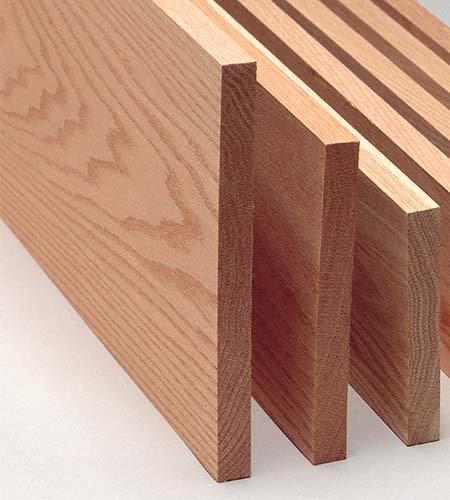
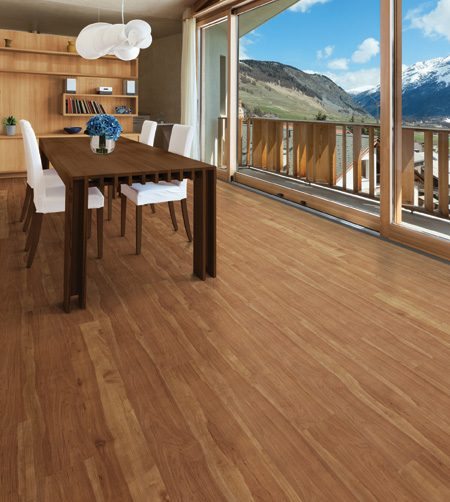
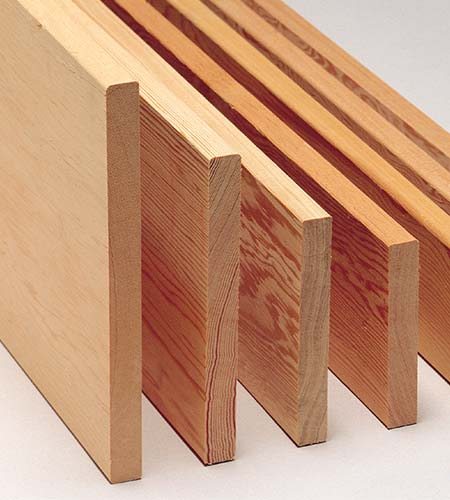
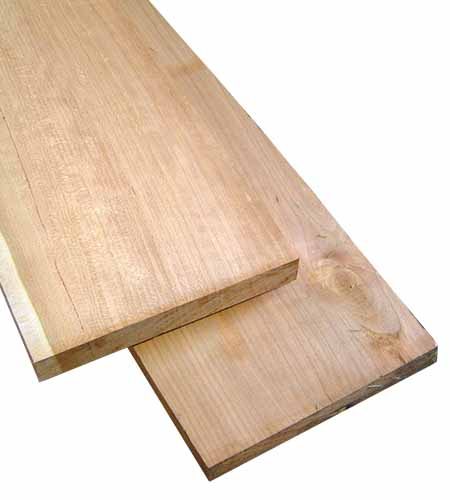
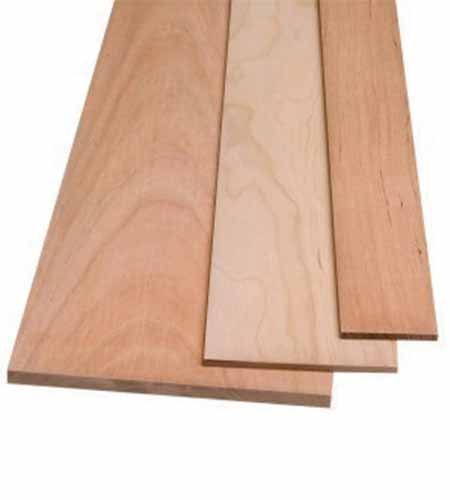
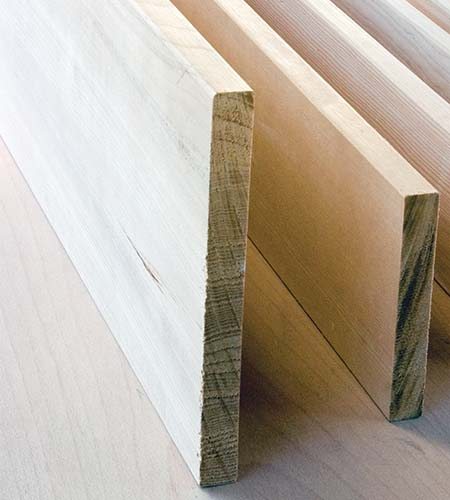
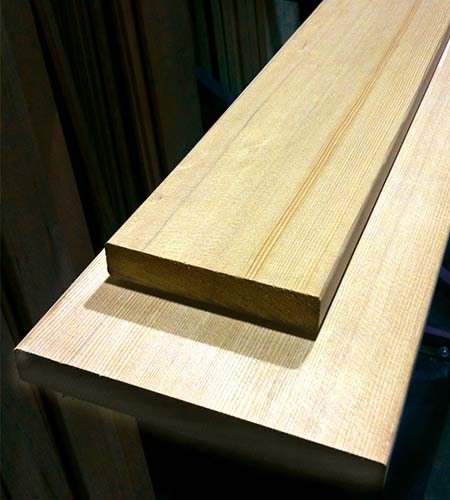
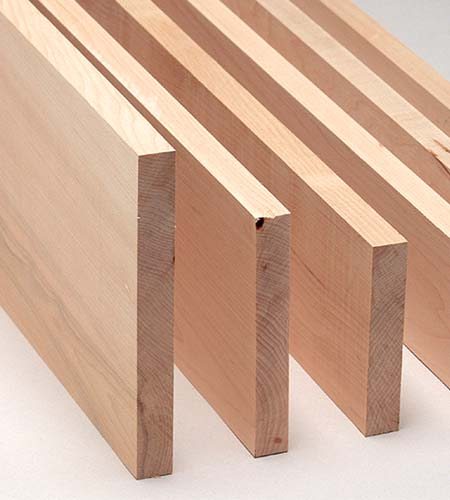
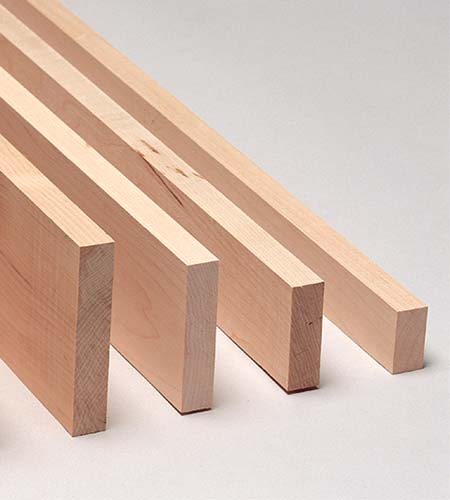
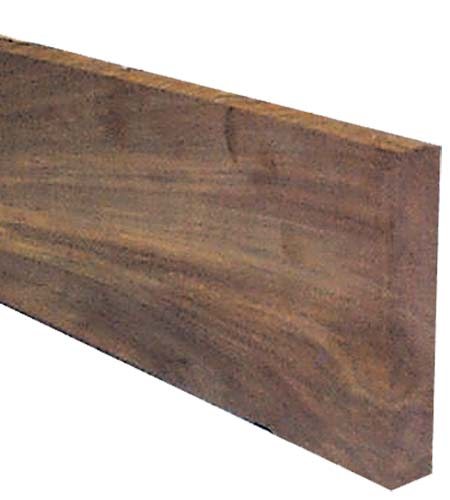
Oak Finishing Lumber is one of the most widely used hardwoods in North American cabinet and furniture making. Available in both Red Oak and White Oak, kiln-dried and surfaced to your specification -- S2S, S4S, rift-sawn, quarter-sawn, or rough. The straight, open grain of oak takes stain predictably and bonds and finishes well across a wide range of applications. A strong, dimensionally stable choice for face frames, drawer fronts, furniture components, flooring, and architectural millwork.
Features
- Available in Red Oak and White Oak -- confirm species and current sizes with your local branch
- Kiln-dried for dimensional stability -- less movement after installation
- Multiple surfacing options -- S2S, S4S, rift-sawn, quarter-sawn, and rough available
- Straight grain with open, coarse texture -- takes stain, paint, and clear finishes well
- Hard and strong -- excellent for structural furniture, face frames, and high-contact surfaces
- Wide range of widths and thicknesses in both S2S and S4S -- suitable from trim details through full furniture components
Specifications
| Species |
Red Oak and White Oak -- confirm availability of each species with your local branch |
| Origin |
Canada and USA |
| Colour / Appearance |
Light to medium brown -- Red Oak slightly warmer tone, White Oak slightly cooler |
| Grain / Texture |
Straight with coarse, open texture -- pronounced ray fleck visible in quarter-sawn cuts |
| Drying Method |
Kiln-dried (KD) |
| Surfacing Options |
S2S, S4S, Rift-sawn, Quarter-sawn, Rough |
| Sizes -- S2S |
15/16", 5/4", 4/4", 1-15/16", 8/4", 12/4" |
| Sizes -- S4S |
1"x2", 1"x3", 1"x4", 1"x5", 1"x6", 1"x8" |
| Workability |
Good -- glues, machines, and finishes well with hand and power tools |
| Availability |
In-store -- species, cuts, and sizes vary by location. Some options may be special order. |
Common Uses
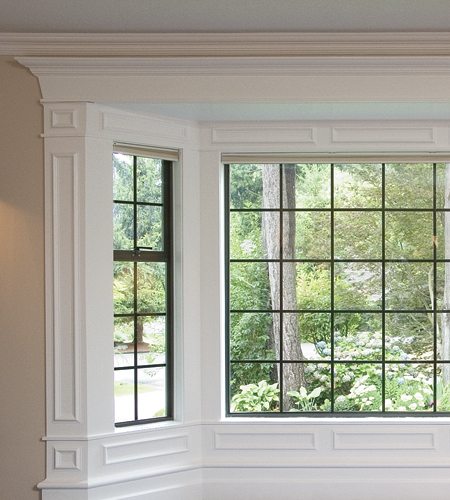
Oak Finishing Lumber is used for cabinet face frames, drawer fronts, door stiles and rails, furniture carcases and legs, stair treads and nosings, window and door casing, baseboard, flooring, and architectural millwork. Red Oak is the more common choice for traditional and transitional styles. White Oak is preferred for contemporary and Scandinavian-influenced designs where a slightly cooler, more linear grain is the design intent.
Pairs Well With
For matching oak sheet goods, use alongside White Oak Cabinet Plywood or Red Oak Cabinet Plywood for face frame and panel work that coordinates with solid oak components. For complementary finishing lumber in other species, see Cherry Finishing Lumber and Walnut Finishing Lumber.
Pro Tips
- Oak has an open grain structure -- apply a grain filler before staining or finishing if a smooth, level surface is required. Without filler, the grain pores will remain visible under even multiple coats of finish, which is desirable for some styles but not others.
- White oak and red oak accept stain differently. White oak takes dark stains more evenly due to its tighter grain. Red oak can blotch under dark stains -- apply a pre-conditioner before staining red oak to improve colour uniformity.
- For quarter-sawn oak, the distinctive ray fleck pattern is most visible under a clear or lightly tinted finish. Avoid heavy pigmented stains on quarter-sawn material as they obscure the figure that makes the cut worth the premium.
Frequently Asked Questions
What is the difference between Red Oak and White Oak finishing lumber?
Red Oak has a warmer, slightly pinkish-brown tone and a more pronounced, open grain. White Oak is slightly cooler in tone with a tighter, more linear grain and greater moisture resistance. Both are widely used for cabinetry and furniture -- the choice is largely aesthetic. White Oak suits contemporary and Scandinavian design; Red Oak suits traditional and transitional styles.
What does S2S and S4S mean?
S2S (Surfaced 2 Sides) means the top and bottom faces have been planed smooth, but the edges are left rough-sawn. S4S (Surfaced 4 Sides) means all four faces have been planed and jointed to a square, ready-to-use dimension. S4S is the most convenient for cabinet face frames and trim work. S2S is preferred when the board will be further milled on site to specific dimensions.
What is quarter-sawn oak and why is it more expensive?
Quarter-sawn lumber is cut at roughly 90 degrees to the growth rings rather than tangentially. The result is a distinctive ray fleck pattern on the face of the board, greater dimensional stability across the width, and reduced tendency to cup or warp over time. It is more expensive because the cutting method produces less usable lumber per log. It is particularly popular for Arts and Crafts, Mission, and contemporary furniture styles.
Is oak finishing lumber suitable for painted applications?
Oak can be painted, but the open grain structure shows through paint unless a grain filler is applied first and sanded smooth between coats. For painted cabinetry where a completely smooth surface is the goal, a primed MDF or finger-jointed pine product is typically a more efficient choice. Oak is best used where the wood grain is meant to be visible.
Do I need to seal or prime oak before finishing?
For stained or clear-finished applications, a pre-conditioner or sanding sealer is recommended to control penetration and produce an even finish. For painted applications, a shellac-based primer or high-build primer fills the grain and provides a better base than standard water-based primer on open-grain hardwoods.
 Find Your Store